
A Past Perspective on Current Events and an Update on Floor Coverings
/What’s Past is Prologue
- The Tempest, Act II, Scene I
A consequence of the long, quiet winter season is a scarcity of news for this quarter’s newsletter. However, the lack of activity did provide an opportunity to reexamine research collected during the 2018-2021 restoration for new insights. One thing that stood out was how many of today’s concerns echo issues from the past. We look at two examples from the late eighteenth century. The first is the challenge to Hemsley's business affairs posed by government-imposed tariffs and trade restrictions, combined with worries about physical safety arising from ongoing hostile actions against international shipping.
The second example is as old as the country, specifically Col. William Hemsley’s ongoing irritation with the price of postage and poor service provided by the U.S. Post Office.
The final story does not directly mirror current events but is relevant to growing concerns about violations of due process and civil rights by Immigration and Customs Enforcement (ICE). This troubling account involves the Hemsley family, though not the Hemsleys of Cloverfields, whose matriarch was kidnapped and subjected to human trafficking. It details Henny Hemsley's decades-long legal battle to free herself and her children from enslavement to George Walls of Queen Anne’s County, Maryland.
A Tale of Two Tariffs
Tariffs on imported goods dominated much of last year’s news. Free Trade agreements, with 20 countries only sometimes standing, another 180 or so countries were hit with a baseline 10% duty on goods imported into the United States. In October, President Trump went so far as to threaten China, the nation’s chief economic competitor, with an additional 100% on top of existing duties. The U.S. Supreme Court struck down the tariffs in February, and since the start of hostilities with Iran in March, investors have redirected their concern to attacks on shipping.
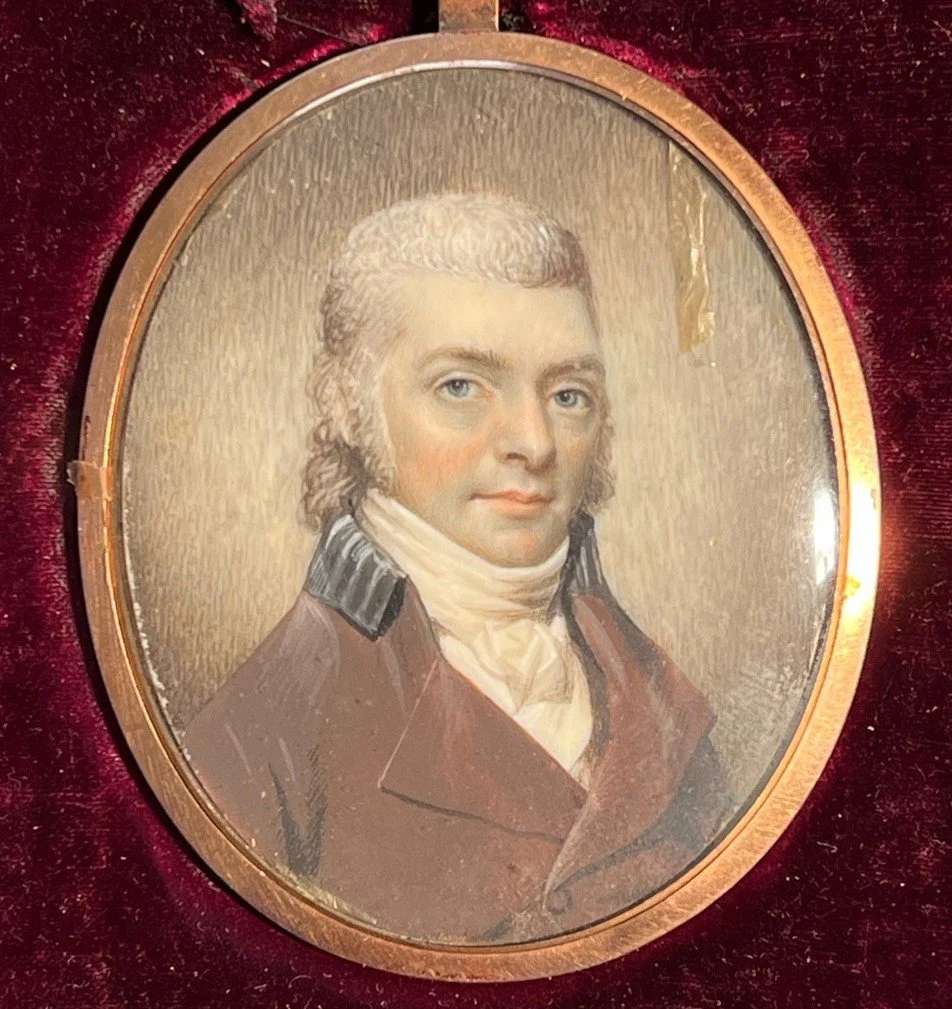
Image 1: Miniature Portrait believed to show William Hemsley, Jr. (1766-1825) as painted in 1802 by Robert Field (1769-1819). Image Courtesy of Thomas Edgar.
More than two centuries ago, these same matters occupied the mind of William “Will” Hemsley, Esq. (1766-1825), who in 1798 contemplated giving up on his struggling legal career and traveling to China to pursue trade opportunities. Upon realizing the complexities and dangers of Sino-American commerce, he abandoned the plan, concluding he “could derive no advantage in going.” [1]
By the time Hemsley came to this decision, American merchants had been operating at the highly regulated Chinese trading port of Canton for fourteen years. Ships brought in American ginseng, furs, silver specie, and a few other Western goods that appealed to the self-sufficient Chinese market. Vessels returned to the United States with luxury goods, including tea, silk, porcelain, and spices, which were in high demand and short supply since the American Revolution disrupted colonial trade patterns. [2]
Formidable barriers to entry, imposed mainly by the Chinese emperor but also obstacles created by the U.S. government and powerful mercantile syndicates, made access to markets difficult for independent interests such as Hemsley.
Will would be permitted to travel to Canton with the cargo he had purchased for export, but once he arrived, he would be confined with other foreigners outside the city and would have no say in negotiations. As Emperor Qianlong strictly limited interactions with Westerners, business was handled exclusively by the Supercargo, the ship’s designated businessman who acted on behalf of the investor’s interests, and the CoHong, the Chinese-authorized merchants. [3]
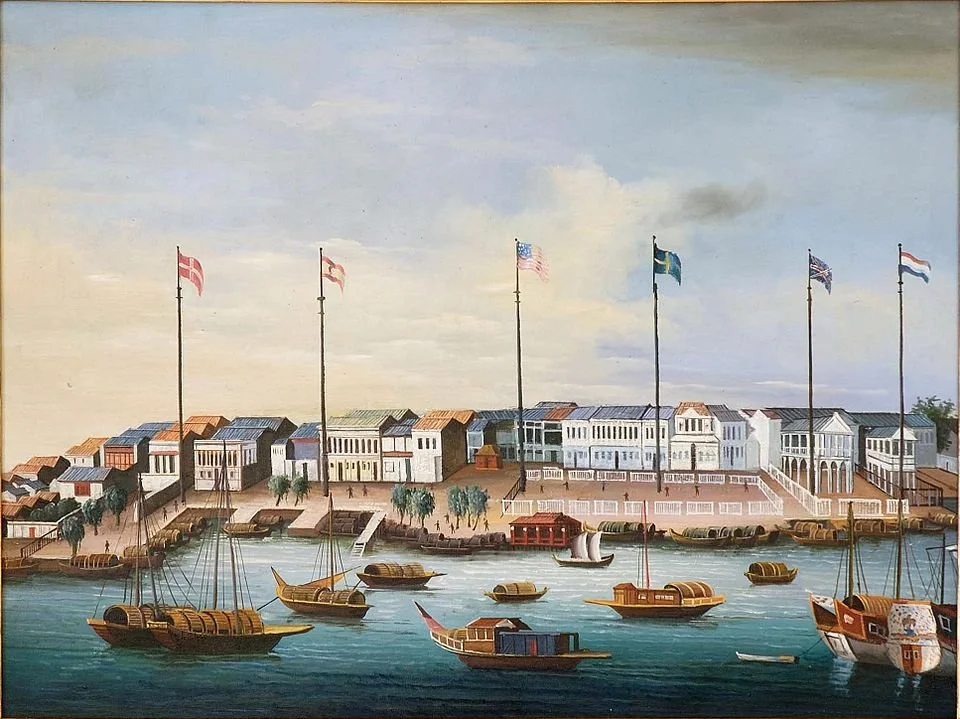
Image 2: A reverse-glass export painting of the Thirteen Factories in Canton China in 1805 by an unknown Chinese Artist. Public Domain. Accessed Wikimedia commons.
Hemsley could come along for the ride and little else. For this, he had to pay £200 for his passage; the cost of freight, insurance, and duties on the goods he imported; living expenses in Canton; and a commission to the Supercargo on the sale of his goods.
Additional costs awaited him back at home. In 1790, the first U.S. Congress passed the “Act Laying Duties on Imports.” The Washington administration advocated for its passage using the same rationale as President Trump last April, arguing that, rather than harming the economy, tariffs would encourage domestic manufacturing and reduce the national debt. The bill passed and imposed import tariffs of 7 to 10 percent on goods brought into the country. [4]
Traveling to China also carried considerable personal risk. In addition to the usual concern about being shipwrecked, pirates terrorized vessels around Canton. Organized criminal gangs commanded hundreds of ships, extorting money from traders, which they sometimes styled as “wealth duties.” In addition to pirates, both the British and French navies were blockading, attacking, and seizing American ships, each for reasons of their own.
Col. Hemsley, concerned that his son would be captured, expressed relief that Will had given up on his plan, telling his brother-in-law, “I am in hope that something else will soon turn up to amuse his mind again and give him employment.” [5]
Postal Problems
This year, the nation celebrates its semiquincentennial, a ponderous, Latin-derived word meaning “250th Anniversary.” Predating the country it is named after by slightly less than a year was the United States Post Office, which was established in 1775. The Revolutionary government, in part to avoid trusting sensitive and potentially seditious writings to a British-controlled postal system, established a parallel delivery system for its communications.
Delegate Col. William Hemsley (1736-1812) attended the Second Continental Congress in Philadelphia that appointed Benjamin Franklin of Philadelphia as the aspiring nation’s first Postmaster General. Franklin brought to the position experience and certain trustworthiness, having recently been sacked from the same position by the British Crown for being too sympathetic to colonial grievances.
Despite Franklin’s credited improvements, complaints about the Post Office’s high cost and poor service are as old as the organization itself. As both the sender and recipient of countless letters, Hemsley was poised to be a valuable customer for the new service, yet it is clear from many of his writings that he consistently avoided using it whenever possible. The difficulty and expense of sending packages and letters are evident in a 1790 letter written to Philadelphia-based lawyer, Hemsley cousin, and future brother-in-law William Tilghman:
“D Sir I yesterday brought your box of goods as far as the post office at Chester Mill [near Centreville, Maryland] in hopes of getting it up by the stage, but the post rode down on horse back. [6] It will be but three or four hours ride for Potter to go down in your sulky and bring it up.
I imagine you got your letter yesterday by the post, as I did not know when a private opportunity would offer. I thought you would rather pay the postage than not get your letter. I am D Sir yrs most afftly, Wm. Hemsley”
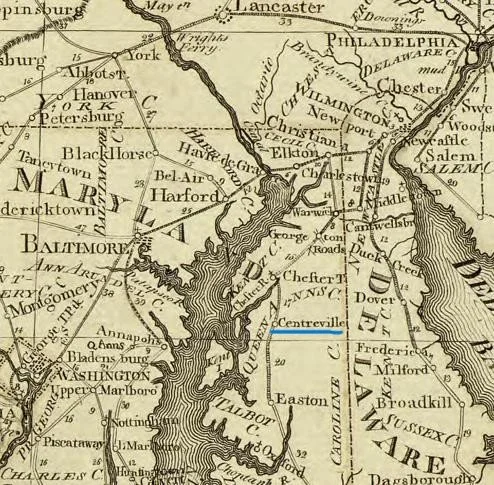
Image 3: Excerpt from Map of the United States, exhibiting post roads & distances, by Abraham Bradly, Jr. (1796). The Centreville Post Office (originally Chester Mill) was the closest to Cloverfields. Source: Library of Congress.
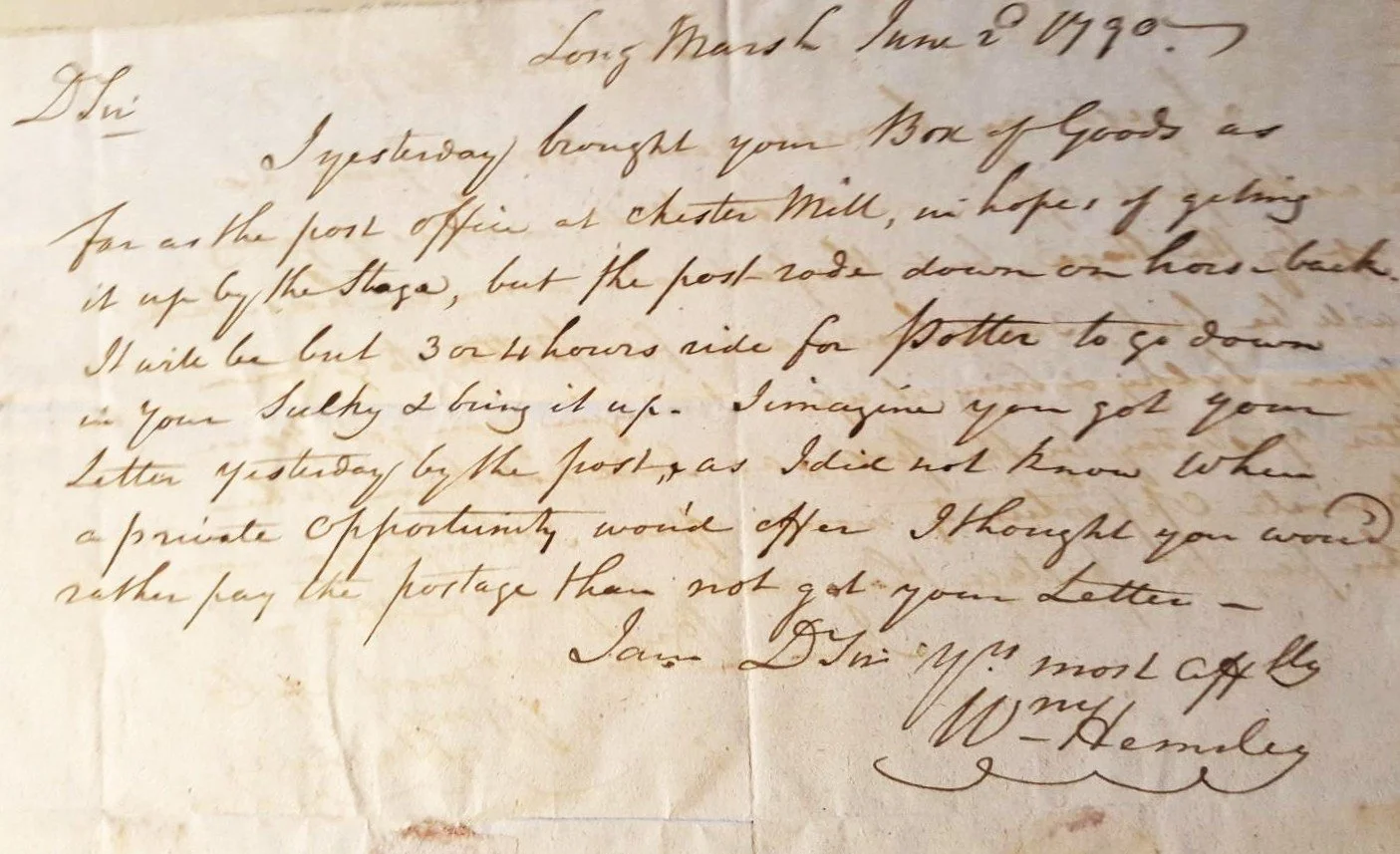
Image 4: William Hemsley writes to his cousin in Philadelphia informing him that he had forwarded a letter to him by post, but the stage did not go, so he must send his servant to retrieve his box of goods. (The U.S. Post Office did not deliver parcels until 1913). Hemsley writes from Long Marsh, which was his farm in what is now Caroline County. Source: William Tilghman Papers, Historical Society of Pennsylvania.
Hemsley practically apologizes to Tilghman for forwarding his letter by official post. [7] That is because, prior to 1847, the receiver, not the sender, paid the cost. When a letter arrived at the destination post office (usually located in an inn, store or tavern), the postmaster calculated the amount due based on the distance from the originating post office. The longer the distance, the greater the cost; not unlike the price of long-distance telephone calls before wireless service.
In this case, the postal carrier delivered Tilghman’s letter to Ben Franklin’s “B. Free Post Office” in his printshop at 316 Market Street, a distance of about 100 miles, at a cost to Tilghman of 10 cents.
Adjusted for inflation, that amount works out to about $3.50; considerably higher than the current 78¢ required to send a first-class letter, but more affordable than using an express service such as FedEx. While short-distance letters cost less, the fee was not inconsequential. It cost 6¢ to claim a letter sent from thirty miles, or about $2.12 in present-day money.
Keep in mind that in 1790, these amounts had significantly more purchasing power than they do today. Estate inventories illustrate this point. For example, appraisers valued the Queenware mustard pot of the late John Dunbracco at 6¢, the same amount as his half-dozen pewter tea spoons. They assessed the salt cellar and pepper box of the deceased Nathan Sparks at 4¢ each, and 6¢ to John McCallister’s collection of six sugar tongs. [7]
The recipient of many letters could buy a lot of tableware if they could make free or less costly arrangements with a traveling friend, merchant, or mariner. And because the cost was borne by the recipient, and a long letter cost as much to receive as a short note, brevity was not the “soul of wit,” but rather bad manners.
A long, postage-worthy letter from Hemsley to Tilghman, written in September of 1797, begins with a complaint about mail delays “owing to the infernal arrangement of the post office,” before moving on to his intended actions on a wide range of business matters, including New York land speculation, pending interest payments, and possible stock purchases.
Without segue, he changes to a personal subject, confiding in Tilghman that “Being lately so long in Company with your Sister I feel such an attachment for her as induced me to make her a proposal to become one of my family,” and asked Tilghman to communicate his thoughts on the arrangement both to him and the prospective bride. [8]
Tilghman’s response does not survive, but he presumably viewed the match favorably, as the couple married two months later.
Henny Hemsley’s Fight for Justice
In 1817, the Court of Appeals of the Eastern Shore heard the appeal case of Henny Hemsley and Children against George Wallis. Henny Hemsley (b. 1791- ?), an enslaved woman owned by George Walls of Kentucky, but formerly of Queen Anne’s County, filed suit claiming that she was the daughter of a married, free-Black woman named Susan, who in 1791 had been kidnapped, sold, and forcibly removed to Queen Anne’s County.
Henny, through her lawyer, William Carmichael, argued that, as the daughter of a free woman, she and her children were legally entitled to freedom. [9]
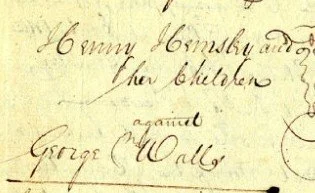
Image 5: Page One of Henny Hemsley and her Childern Vs. Geroge Walls, HEard on Appeal in June 1817. Source: Maryland State Archives.
The case hinged on the testimony of eye-witness Greenbury Griffin. Griffin confirmed Hemsley’s claim. He told the court he had traveled with Captain James Sweat to Yorktown in the weeks leading to the surrender of the British forces at Yorktown, where he saw Susan “selling cakes and beer” at Gosport Shipyard and along the shore of the York River. According to Griffin, several men captured Susan, forced her aboard Sweat’s vessel, and sold her to him.
According to Griffin, Sweat told her “he would make her his wife,” and that Susan railed against him, insisting she was a free woman and already married. Griffin further testified that Susan’s long-held claim was common knowledge in the area. A second witness, John Denny, told the court that Susan had previously recounted the same story to his mother. [10]
Court records provide little information about Susan’s life after her abduction, recording only that she died enslaved to John Gibson of Queen Anne’s County. Unknown is how long Sweat forced Susan to remain with him and who fathered her children. Even her last name and date of death are left out.
The jury found in Henny Hemsley's favor, but her victory was short-lived as Walls appealed the decision. A new trial with a different jury was held in May 1818. Although the judgment does not survive, Henny obviously prevailed again, as the county issued Certificates of Freedom for her and her children, Susan, Juliana, and Pricilla, later that month.
The elder Susan’s story provokes sadness over the violence and crimes inflicted upon her and anger that justice did not come during her lifetime.
And what about Henny? How was an enslaved Black woman able to persuade a lawyer to take up the case of a decades-old crime, let alone pay for his services? It seems likely Henny’s counsel, local lawyer William Carmichael (1775-1853), served pro bono. Carmichael held strong abolitionist sentiments that led him to free more than 130 of his family’s slaves between 1811 and 1839, making it one of the largest manumissions by a single family in Maryland’s history. [11]
Henny took a considerable risk in bringing legal action. How did George Walls react to being sued? Was he the type of man to inflict violence on Henny for this action? He had recently moved to Kentucky. Did she intentionally wait until he was gone out of fear for her safety? And, of course, what connection, if any, does this Hemsley family have to the Hemsleys of Cloverfields? Nothing has yet been discovered to link the two.
The Hemsleys of Cloverfields knew William Carmichael both personally and professionally. Will Hemsley, Esq. (1766-1825), and he were roughly the same age, and both were lawyers who were strongly opposed to slavery. The family certainly would have known about the controversial trial taking place only a few miles away.
Beyond that, we will avoid speculation. This dramatic case raises many questions that, hopefully, additional research will eventually answer.
[1] William Hemsley to William Tilghman, February 5, 1799. William Tilghman Papers, Manuscript Collection 659, Historical Society of Pennsylvania.
[2] William R. Sargent, America and the China Trade. History Now, Issue 42, Spring 2015), https://www.gilderlehrman.org/history-resources/essays/america-and-china-trade.
[3] Ibid.
[4] Dael A. Norwood, Global Trade and Revolution: The Politics of Americans’ Commerce with China. Omohundro Institute, December 2017, https://oieahc.wm.edu/publications/blog/global-trade-revolution.
[5] Hemsley to Tilghman, February 5, 1799.
[6] The U.S. Post Office handled only letter mail. Its successor, the Post Office Department, established the parcel post in 1913. Prior to that, packages were sent by public coach, private courier, or, after 1907, the United Parcel Service.
[7] Queen Anne’s County Inventory Records 1786-1791 Inventory of Nathan Sparks, December 12, 1788, p. 177. Family Search. https://www.familysearch.org/ark:/61903/3:1:33SQ-GYMC-4JY?wc=SNYZ-82S%3A146534301%2C146806501%26cc%3D1803986&cc=1803986&lang=en&view=index&groupId.
[8] William Hemsely to William Tilghman, September 26, 1797. William Tilghman Papers, Manuscript Collection 659, Historical Society of Pennsylvania.
[9] Henny Hemsley and her Children vs. George Walls. June 1817. Queen Anne’s County Court of Appeals, Judgment Records of the Eastern Shore, Maryland State Archives MSA SC 4239. https://msa.maryland.gov/megafile/msa/speccol/sc5400/sc5496/051600/051634/html/51634bio.html.
[10] Ibid.
[11] Jack Shaum, Carmichael House in Centrevills has Many Links to Maryland History, MyEasternShoreMD, April 3, 2015, https://www.myeasternshoremd.com/news/queen_annes_county/carmichael-house-in-centreville-has-many-links-to-maryland-history/article_2164977e-5f1f-57a8-8f55-66d619e2a74e.html.
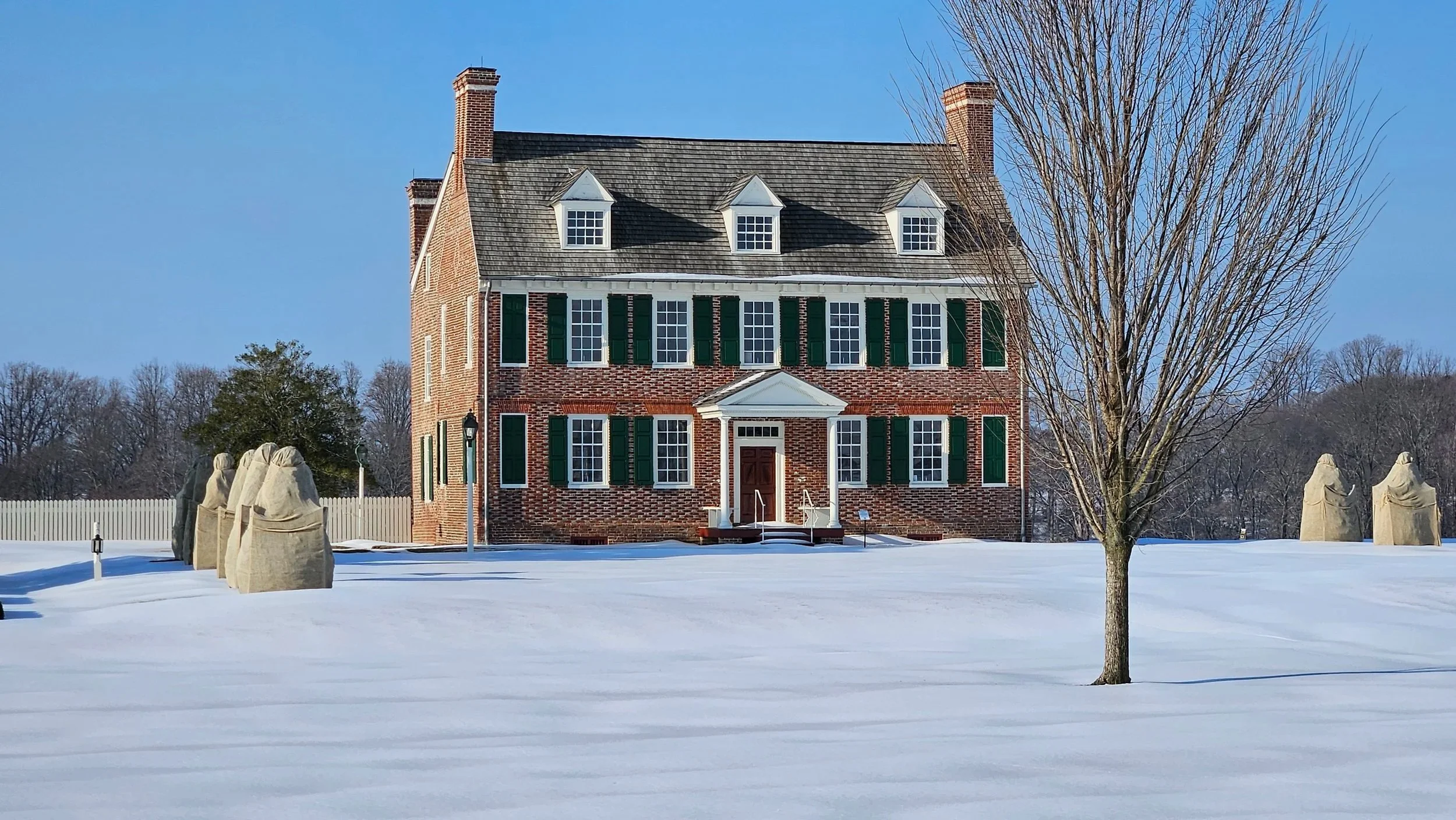
The 2025-2026 Maryland Winter Was particularly Cold and Snowy. The tent-like structures are Ornamental Trees Covered in Burlap to protect them from Winter Burn and Deer.

While the Garden’s 2026 Spring Spectacular remains a few weeks away, booms have started to appear.
Floored: A Look at the Installation of the Final Floor Coverings for Cloverfields
By: Rachel Lovett, Furnishings Consultant
With the installation of the upstairs drawing room floor covering this past December, the Foundation completed the final phase of our greater effort to thoughtfully interpret and install appropriate floor coverings throughout Cloverfields. Each space has been approached with careful research and intention, and this last project allowed us to round out the story in a way that feels both historically grounded and practical for the house today.
In eighteenth-century America, straw and Canton matting offered a sensible alternative to costly imported carpets, providing a middle ground between bare floorboards and luxury textiles. Straw and rush mats, woven from local grasses, were widely used in households that wanted durability and insulation without the expense of wool carpeting, especially in high-traffic areas. Canton, or Indian matting, was imported from the East in long, woven strips with bound edges and became increasingly popular in the later eighteenth century. These mats were often recommended for summer use because they stayed cool underfoot, were easy to sweep, and did not hold dust like heavier carpets. Even in prominent homes such as George Washington’s Mount Vernon, matting can be seen in formal spaces like the New Room, where it protected wooden floors while still contributing to the overall appearance of refinement.

Image 1: New Room at Mount vernon. Photograph Courtesy of Gavin Ashworth.
With that context in mind, we viewed the upstairs drawing room as a lively and functional space within the Hemsley household, appropriate for this type of floor covering. It was likely used for informal entertaining, games, and perhaps even lessons for the Hemsley children. Rather than introducing a heavy textile carpet, we wanted a durable area floor covering that would capture the look and texture of historic straw matting while standing up to modern visitation. After researching a range of possibilities and speaking with colleagues, Amanda Isaac, Curator of Fine and Decorative Arts at George Washington’s Mount Vernon for the Mount Vernon Ladies’ Association, recommended looking at sisal-style mats produced by companies such as Stark. These rugs replicate the appearance of grass matting but are woven with stronger fibers to ensure longevity. She also noted that the National Park Service has used similar products at several sites. Based on her guidance, we selected an eight-by-ten sisal rug from Stark in the Chinese Sea Grass pattern. The finished result nods to eighteenth-century seasonal matting traditions while providing the strength and durability required in a working historic house museum, and it is a piece we expect to use for many years to come.
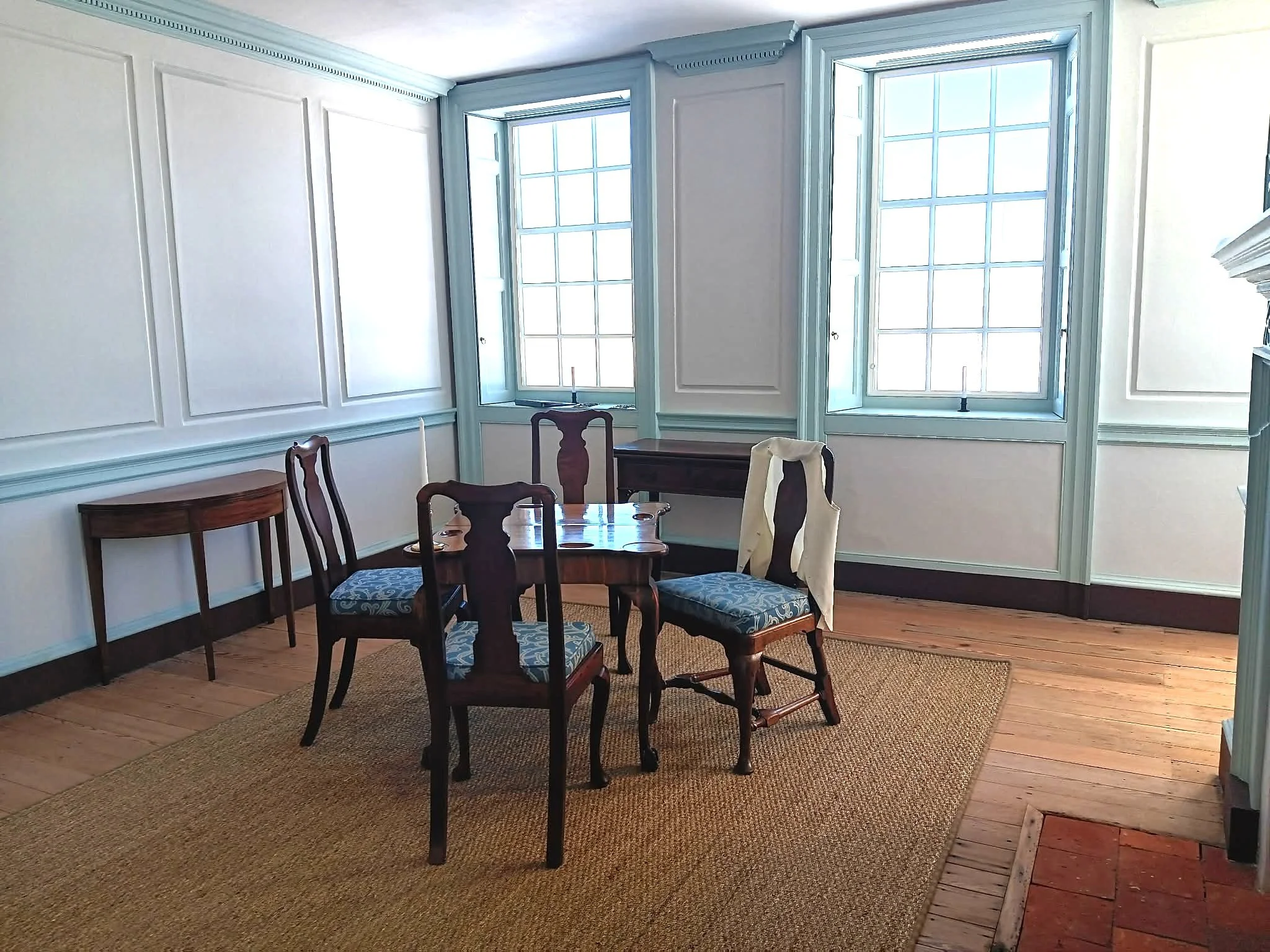
Image 2: Stark sisal rug in the upstairs drawing room.
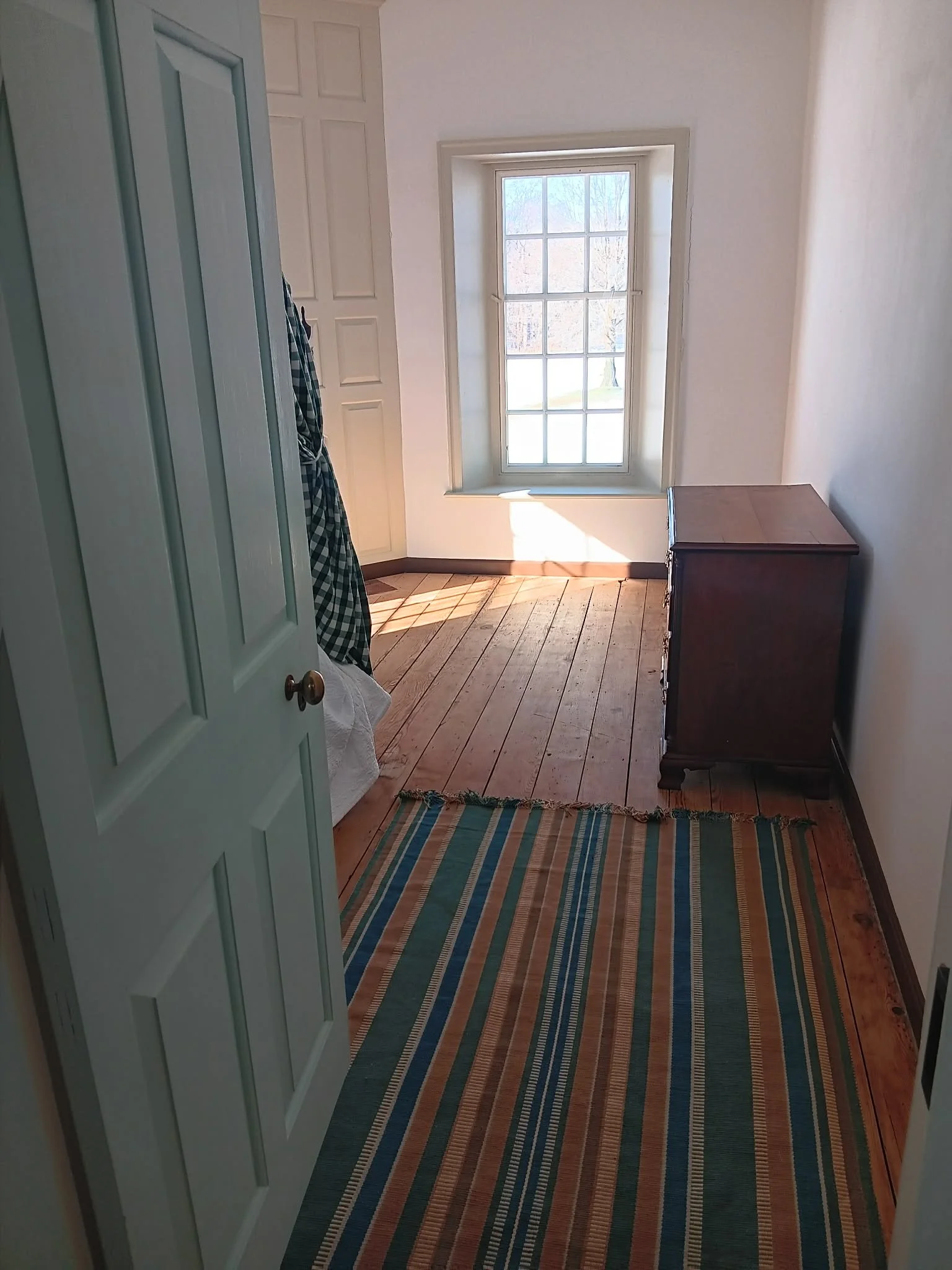
Image 3: Bedside rug in the Girls’ Bedroom. Photograph by Rachel Lovett.
Another recent addition to the floor coverings at Cloverfields was the installation of three bedside carpets in 2025 for the Hemsley Bedchamber, Guest Bedchamber, and Girls Room, recreated for Hemsley’s two daughters, Sarah and Henrietta, who would have been 6 and five respectively. For the floor covering, we installed a reproduction flat-weave, or “list,” carpet from Woodard and Greenstein.
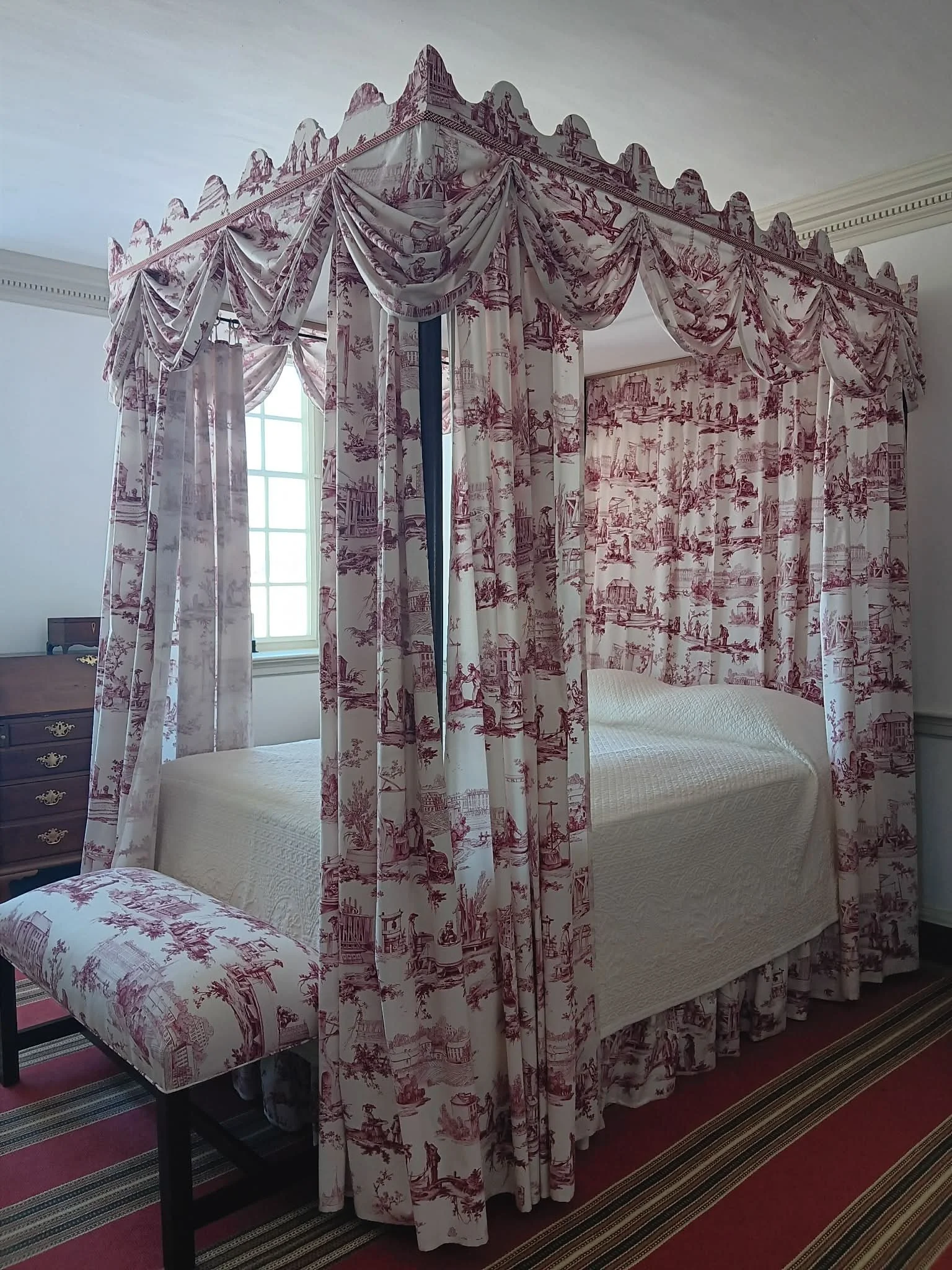
Image 4: U-Shaped Bedside Rug in the Hemsley Bedchamber.
Unlike costly imported Wilton and Brussels carpets, which were typically reserved for public parlors or drawing rooms, flat-weaves could be produced locally, were widely accessible, and were often used in bedchambers. Rather than covering the entire floor wall-to-wall, such carpets were commonly arranged as bedside rugs or in U-shaped configurations, as we chose for the main Hemsley Bedchamber, and the smaller area carpets for the Guest Bedroom and Girls' Room.
Downstairs, the Dining Room received a hand-painted floorcloth in August of 2024. This special area floorcloth was created by Betsy Greene of Baltimore. Greene is a decorative painter and has worked at several historic house museums, including notably doing the faux graining on the front door of the Hammond-Harwood House Museum in Annapolis. This floorcloth complements the Adelphi Jefferson Trellis wallpaper in the room and features a trellis with a green vine design on a white background, a Greek key border, and clovers at the four edges to honor the site’s name. The green paint is Southfield Green, from the Benjamin Moore Historic Collection.
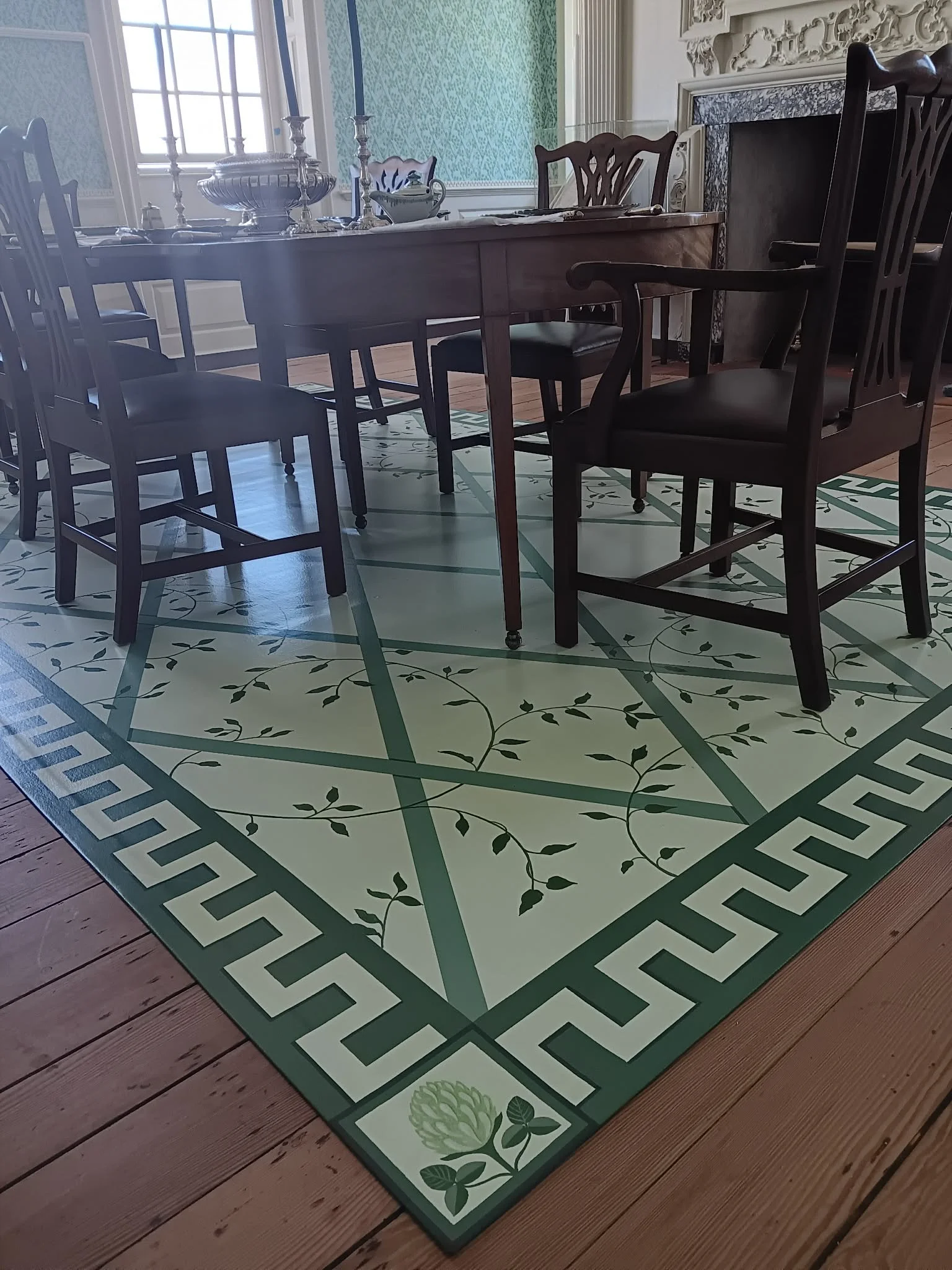
Image 5: A Hand-painted floor cloth protects the dining room floor.
In March 2025, the installation of a historically appropriate carpet in the parlor at Cloverfields marked the culmination of months of research, collaboration, and careful craftsmanship. The room has gained depth, cohesion, and a renewed sense of eighteenth-century presence.
This project was undertaken in collaboration with historic interiors consultant Jean Dunbar, who works in-house at Grosvenor Wilton, the distinguished English carpet manufacturer established in 1790 and widely regarded as the premier reproduction house for historic museum period rooms. The carpet was installed by Gfroerer Carpets, a firm founded in 1890 that specializes in museum-quality historic installations. Together, their expertise ensured that the final result was both historically grounded and technically exceptional.
Homes of the period often featured dark colors and vibrant patterns, including floral sprays and scrolling botanical motifs that visually anchored a room. Lighting options were limited to candles, fireplaces, and oil lamps, which created interiors that were intimate but often dim. Richly patterned carpets compensated for this constraint. Their depth of color and movement absorbed and animated available light, making spaces feel warmer and more dynamic.
Brussels and Wilton carpets, introduced to America in the 1750s, represented a significant advancement in domestic luxury. Woven on narrow looms and seamed together to create wall-to-wall coverage, they reduced drafts, softened footfalls, and transformed bare wooden floors into statements of refinement. Brussels carpets featured a durable looped pile, while Wilton carpets evolved to include a cut pile that created a softer, velvety surface. By the 1780s, inventories and advertisements indicate a growing preference for Wilton carpets in America’s most fashionable urban homes.
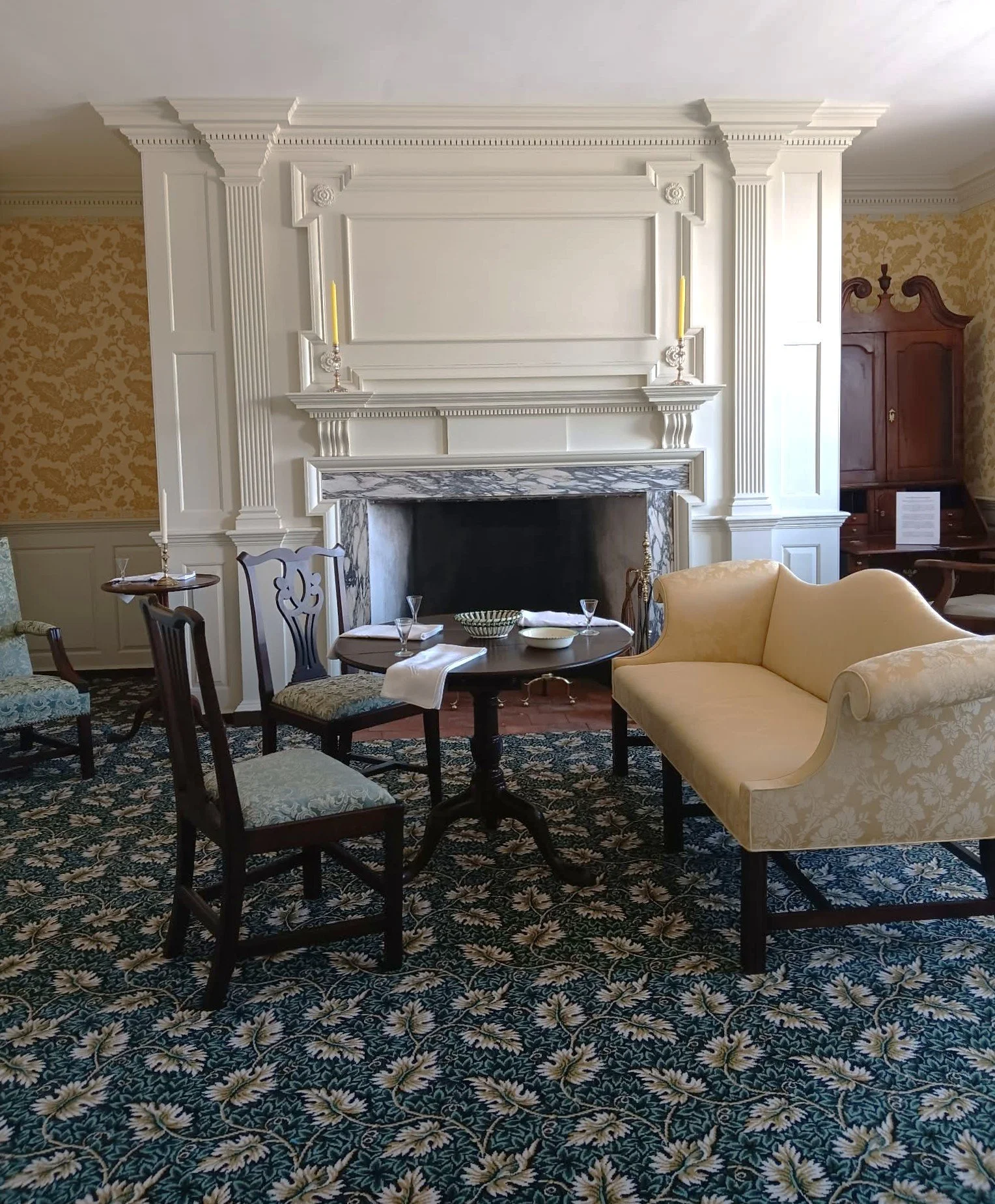
Image 6: The rich colors and botanical pattern of the Custom-made Grosvenor WIlton Carpet brings vibrancy to Cloverfields’ Parlor.
A notable contemporary would have been William Hemsley’s friend and Eastern Shore neighbor, William Paca, who used wall-to-wall carpet in his Annapolis townhouse Dining Room. Historic Annapolis Foundation, which now operates the property as a museum depicting the Paca occupancy (1763-1780), installed a period wall-to-wall carpet in the Dining Room, also from Grosvenor and Wilton. Alexandra Deutsch, former Historic Annapolis curator and now the John L. and Marjorie P. McGraw Director of Collections at the Winterthur Museum, initiated the project, which was overseen by then curator Pandora Stinton Hess in 2013.

Image 7: A Grosvenor Wilton carpet covers the floor of the The Paca House Dining Room in Annapolis. Image Courtesey of of Historic Annapolis.
By the late eighteenth century, tastes were changing. Wall-to-wall fitted carpeting was coming into vogue, particularly in major urban centers such as New York and Philadelphia, where imported British textiles were readily available, and elite consumers were eager to demonstrate refinement through the latest fashions.
Colonel William Hemsley was not an isolated provincial planter. He traveled, conducted business, and spent time in these urban environments in both New York and Philadelphia. He was clearly attuned to broader transatlantic trends. Cloverfields itself reflects this awareness in its architectural ambition and interior appointments. The decision to interpret the parlor with wall-to-wall carpeting acknowledges that Hemsley would likely have embraced a fashionable innovation that signaled status, comfort, and cosmopolitan taste.
Within the hierarchy of rooms at Cloverfields, the formal parlor, located to the right of the entrance hall, was among the most important. This was the Hemsley family’s principal entertaining space in the late eighteenth century, where significant guests and close friends were received. Archival records indicate that some of the most expensive objects in the house were placed here, including a sofa, desk with bookcase, mirror, and japanned tea equipage. Given the space's prominence and the documented investment in luxury goods, a fitted carpet would have been entirely consistent with the room’s function and status.
After extensive research into appropriate designs, the Pembroke Leaf pattern in Wilton sheared pile was selected. The choice was deliberate and rooted in material culture, architecture, and Hemsley’s own recorded preferences. The Pembroke Leaf pattern extends the botanical language established by the parlor wallpaper (Adelphia Everard Damask in Yellow), visually carrying leaf forms from wall to floor. Its dark green ground anchors the yellow walls, creating harmony while adding richness and depth. The restored mantel carvings echo the floral design, reinforcing a broader eighteenth-century aesthetic impulse to bring the outside natural world into interior space. In this period, nature was stylized and idealized, integrated into domestic settings as a sign of refinement and order.
This pattern has also been used in several distinguished American historic house museums, including the dining room at Gore Place, the parlor at Hamilton Grange, and previously at Stratford Hall.
Hemsley frequently sourced goods from England. On Maryland’s Eastern Shore, where tobacco dominated the economy and urban centers were limited, plantations like Cloverfields functioned as largely self-contained communities. Luxury goods, including carpets, were typically imported directly from Britain.
Despite the political rupture of the American Revolution, Maryland’s elite continued to draw heavily on British cultural and aesthetic models. This was the era of the consumer revolution, when imported goods signaled social position as clearly as land ownership. A British-made, sheared-pile Wilton carpet would have aligned with Hemsley’s aspirations and purchasing patterns.
Inventory records also suggest his fondness for green, a color noted multiple times in porcelain and textiles. He incorporated architectural elements, such as faux ashlar stone walls, that suggested nature indoors, reflecting a popular late eighteenth-century design concept. The Pembroke Leaf pattern, with its botanical motif and rich green ground, resonates strongly with these documented choices.
Taken together, these installations do more than furnish individual rooms. They restore a layered understanding of how floors functioned in the eighteenth century as indicators of wealth, comfort, season, and taste. One year after the parlor carpet installation, the room feels grounded and near complete. Across Cloverfields, the floor covering project reflects a moment when American interiors were shaped by global trade, evolving fashion, and the aspirations of a Maryland planter attuned to the wider Atlantic world.